Run the Work
Keep the business moving while the work is in motion.
Winning work has to be run. Delivering work has to be run. Running the work is how the company knows what happens next, who has it, and when a decision genuinely needs you.
It is the layer most businesses never name, which is why it is usually the one still sitting with the owner.
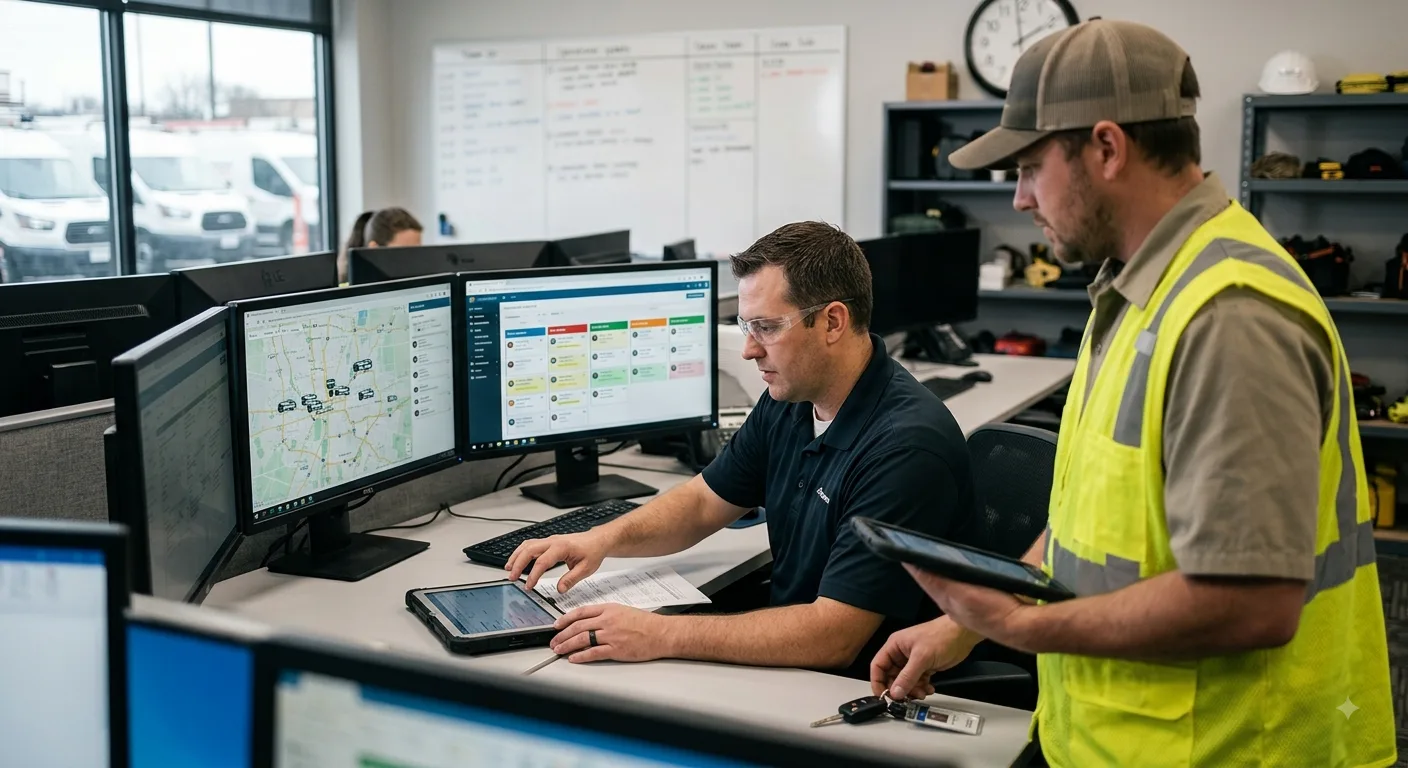
What it looks like when Run the Work breaks.
Can the business handle routine decisions and exceptions without constantly asking you what happens next?
When the company has to come back to you to know what happens next, that dependency creates Executive Tax.
We start with the responsibility, not the tool.
Ecrof looks at what the company needs to know to keep moving, who is allowed to act on it, and how an exception gets recognized as an exception instead of stopping the work.
What actually gets built depends on what the responsibility needs. We do not start with a feature list.
If this is where your business keeps needing you, let’s find out whether Ecrof is the right fit.
To run the work well, the business needs access to what it knows, clear ownership, defined decision authority, and a way to recognize when an exception truly requires leadership.
That means giving the company a reliable place to hold and use its standards, decisions, customer context, and operating rules. We call that the Business Brain.
It means writing down what each role may approve on its own, what needs help, and what genuinely belongs with you. And it means giving the responsibility an operating home, so it belongs to a part of the business rather than to a person.
See how Ecrof builds itWhat it looked like in a real business.
of founder admin work removed each week
the founder was away while the business kept running
Heavenly Ink Credentialing. Work now advances when the underlying business event occurs rather than when somebody remembers to push it, and the founder was able to take a full week away while the team continued operating.
We measure whether the responsibility actually moved.
For run the work, that usually means escalation volume, decision turnaround, questions routed to the founder, and how many routine decisions are handled independently.
Every engagement starts with a baseline and is measured against the work we agreed should move.
Every business has three jobs.
Most owners arrive certain about one and discover the real cost sits in another.
Your company should be able to create and convert opportunity without you personally pushing every deal forward.
Your company should be able to turn what was sold into what was promised without you holding every piece together.
Where does the responsibility live? Learn how Ecrof organizes work across Operational Departments
Ready to make more of the work move without you?
If you already know run the work depends too heavily on you, apply and we will tell you honestly whether Ecrof is the right next step.
Win, Deliver and Run describe what the business has to carry, not packages you buy.