We Rebuilt Our Own Brain Last Week. Here Is What We Learned.
Most AI advice tells you to pick a model and learn it deep. We took the opposite path. One universal brain. Any model. No rebuild when the model changes.
Most AI advice tells you to pick a model and learn it deep. Claude. ChatGPT. Gemini. Pick a horse, marry the horse, ride it for a few years.
We took the opposite path. Last week, we rebuilt our own company's brain. Every file we use to know who we are, who we sell to, how we price, how we deliver. We made it work with any frontier AI. Add a new model in thirty minutes. Drop one with nothing breaking. The intelligence does not depend on the vendor.
Here is what we did, why it matters, and what it means for any service business owner thinking about AI.
The Trap Most Companies Fall Into
When a company decides to use AI, the first question is almost always: which model?
They pick one. They build workflows around it. They train their team on its quirks. They write prompts that assume its specific behavior. Six months later, the model releases a new version with different pricing, different limitations, different output patterns. And the company is partially rebuilding from scratch.
This is not a hypothetical. It is what happens every time a major model update ships. We watched it happen to companies around us. And we decided early that we were not going to build that way.
The question is not which AI. The question is what intelligence do you have to feed it.
What We Actually Built
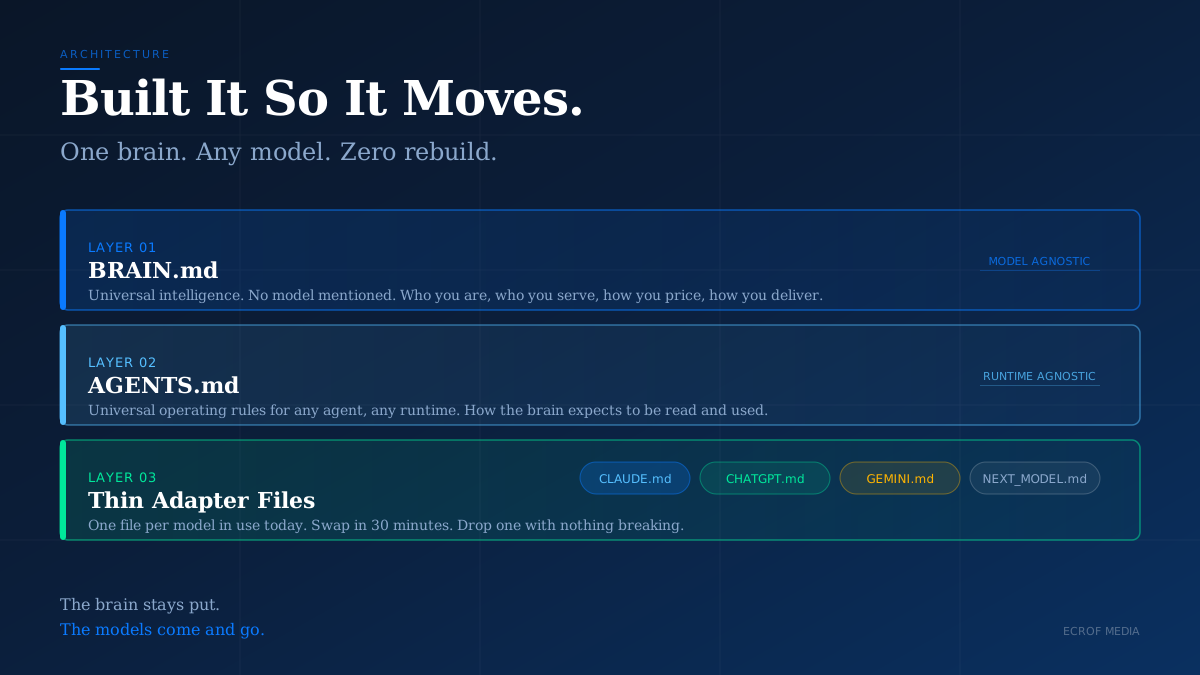
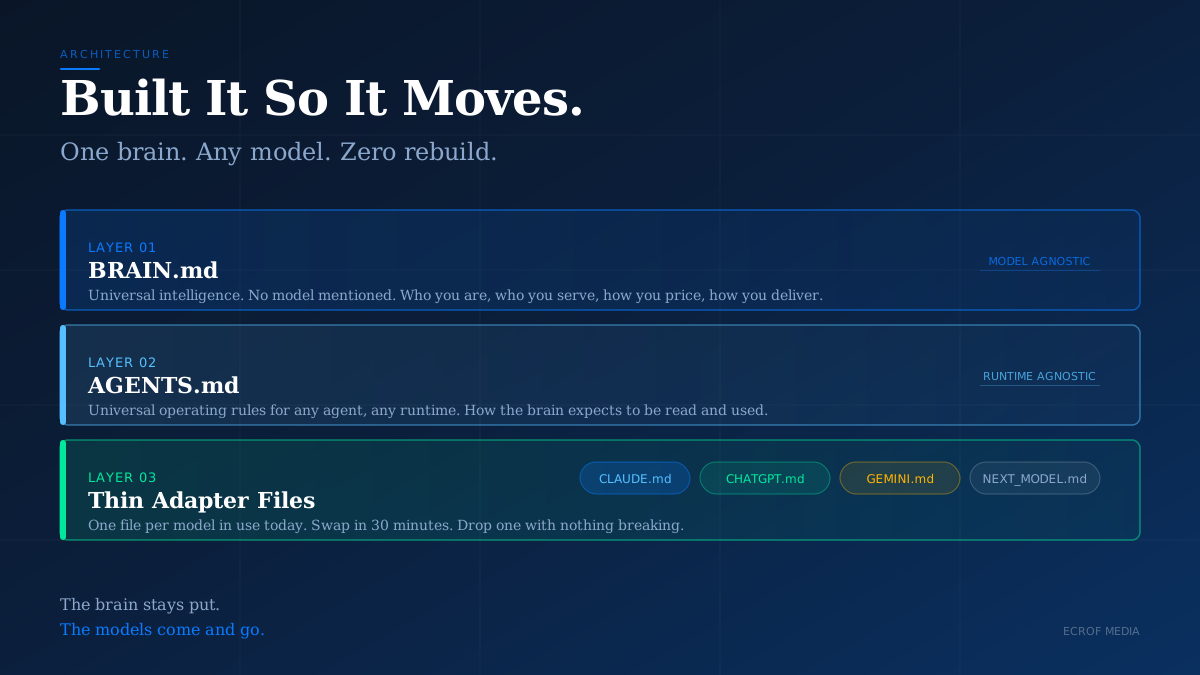
Three layers at the root of our repo. Simple. Intentional.
Layer One: BRAIN.md
The universal brain. No mention of any specific AI model. Who we are, who we sell to, how we price, how we deliver, what we measure. Everything the business needs to be known. Written once. Readable by any model, any agent, any runtime.
Layer Two: AGENTS.md
Universal operating rules for any agent. How the brain expects to be read and used. What the agent is allowed to do without asking. What requires confirmation. How to handle ambiguity. Also no model mentioned. Works with Claude, ChatGPT, Gemini, or anything that comes next.
Layer Three: Thin Adapter Files
One small file per AI we actually use today. CLAUDE.md. CHATGPT.md. GEMINI.md. Each one handles the model-specific quirks: token limits, tool calling conventions, context formatting preferences. Nothing that belongs in the brain lives here. These files are disposable by design.
Want to add a new model tomorrow? Thirty-minute job. Create a new adapter file. Point it at the brain. Done. Want to drop one? Delete the adapter file. The brain does not notice.
The Seven Layers Every Business Has
Building the universal brain required us to actually define what lives inside it. Not vaguely. Precisely. Seven layers. Every founder-led service business has them. Most have never written them down.
- Identity: the businesses that cannot explain their value compete on price. Package this and every conversation starts from a different position.
- Audience: turns we work with anyone into we know in sixty seconds if this conversation is worth having. That filter alone changes the close rate.
- Offers: most service businesses have a price list, not an offer architecture. The difference is whether the buyer understands why they are paying what they are paying before they sign.
- Revenue: where the money actually comes from, where it leaks before it lands, and which one or two numbers tell you something is wrong before the bank account does.
- Operations: what gets written down so decisions move without the founder in every conversation.
- Intelligence: the numbers that tell you the business is healthy before a problem becomes visible. Without this, founders are managing by feel.
- Distribution: not where the business posts. Where the buyer pays attention. Most founders do not know the gap between the two. This layer maps it.
You package each layer into small files. Files small enough that any one of them can be loaded fast. Each file gets a tag at the top: who owns it, when it was last updated, what status it is in. That is the whole trick.
When that work is done, three things become possible that were not before. A new hire can be useful in days rather than months. An AI agent can do real work because the data is structured and specific to your business. The business keeps moving when one key person steps away.
The Thing Most Founders Do Not See
There is a version of this problem that goes deeper than the founder.
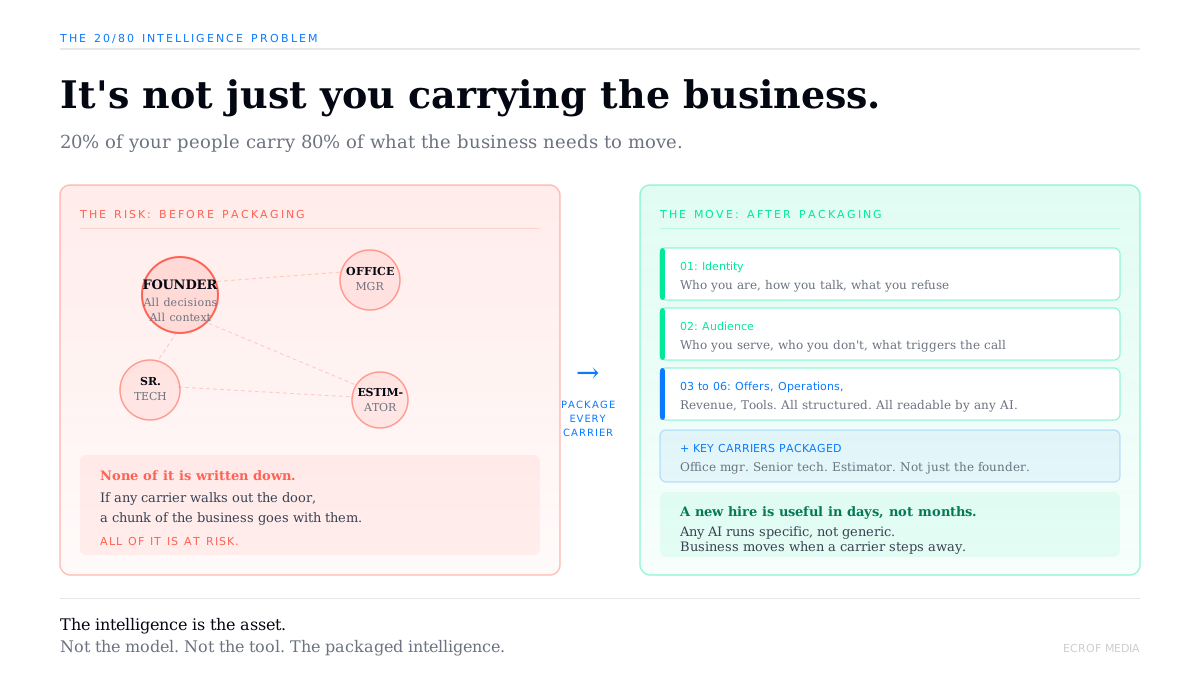
It is not just you carrying the business. There are usually two to four other people carrying pieces of it. The office manager who knows every client preference. The senior technician who knows every code interpretation. The estimator who has seen every job that came through the door. The controller who knows where every dollar goes and why.
We call this the 20/80 Intelligence Problem. Twenty percent of your people carry eighty percent of what the business needs to move.
None of it is written down. All of it is at risk.
If any one of those carriers walks out the door, a chunk of the business goes with them. Not because they are irreplaceable as people, but because their knowledge was never packaged.
When we built our brain, we did not just package the founders. We packaged the carriers. Every person whose departure would leave a visible gap in the business. Their client preferences, code interpretations, pricing instincts, relationship context.
What We Did, In Eight Steps
This is the sequence. Plain language, no jargon.
- Cleaned up first. Old files we do not use went into an archive folder. Not deleted. Out of the way.
- Split the large files. Identity used to be one long document. We broke it into four pieces: identity, voice, decision rules, mission. Each one does one job.
- Built the missing layers. We had identity. We did not have a clean audience layer. Now we do.
- Wrote down what we do not measure. Most of our company numbers are tracking gaps. Marked honestly as such, not invented to fill space.
- Built the prompt library. Twelve standard jobs the AI does the same way every time: sales follow-up, discovery recap, weekly content. Each prompt knows which files to load before it works.
- Made it model-agnostic. Three layers at the top. Brain, rules, adapters. Add or drop a model in thirty minutes.
- Logged every gap we found. One file. Living. Updated as questions surface and get answered.
- Updated our own delivery standards. Every future client brain ships with this same LLM-agnostic architecture.
Why This Matters for Service Business Owners
If you run a service business and you are thinking about AI, the first question is not which model. The first question is what intelligence do I have to feed it.
Without packaged intelligence, every AI tool you buy will be generic. It will give you generic answers, generic drafts, generic analysis. Because it does not know your specific business.
With packaged intelligence, every AI tool gets specific to your business from day one. And stays that way even when you swap tools.
The model is not the moat. The packaged intelligence is the moat. Build that first. Deploy second. Swap models whenever you want.
Build it so it moves.
Package the intelligence. Structure it so any model can read it. Then watch the business move without you having to be in every conversation. That is the whole game.
See this in your own business.
We run a live workshop where we walk through exactly where your business intelligence is accessible and where it is still trapped. You will leave with a clear picture of what needs to be packaged first.
Join the Live Workshop