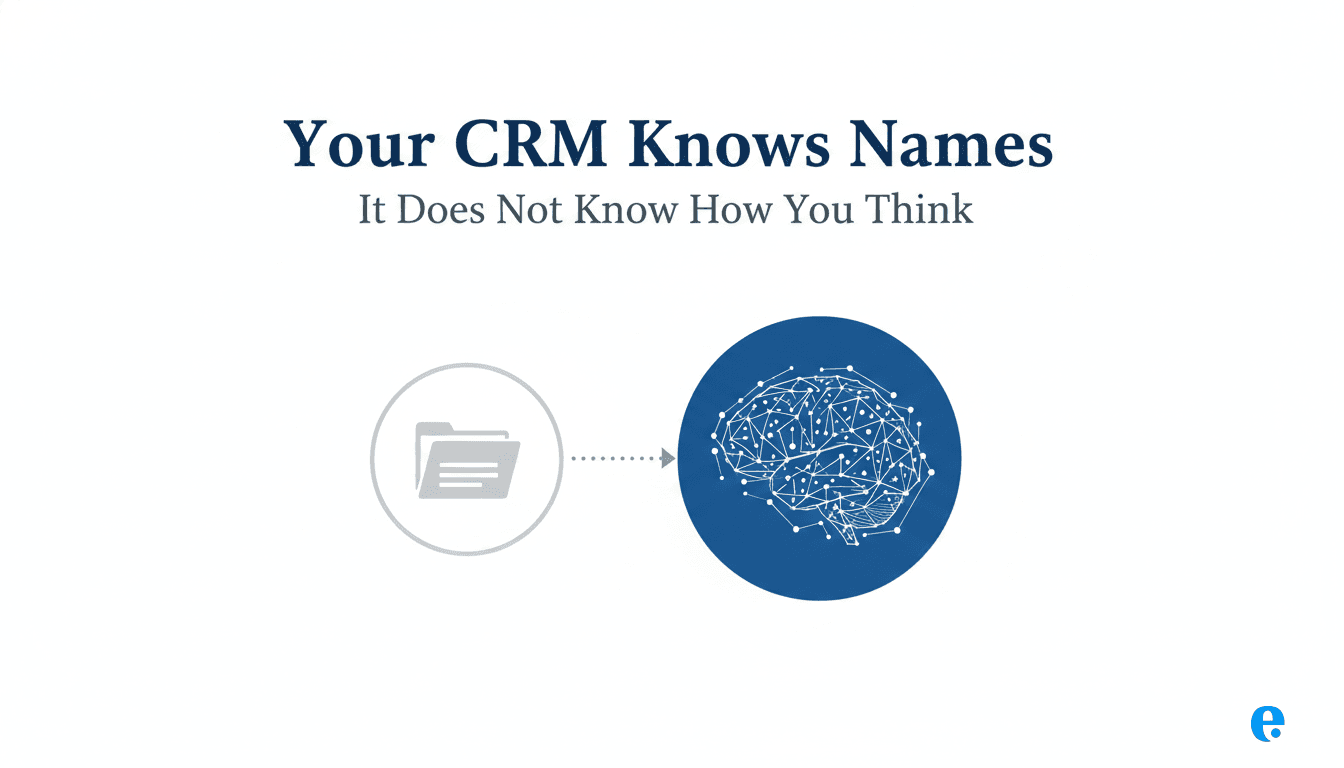
Your CRM Knows Names. It Does Not Know How You Think.
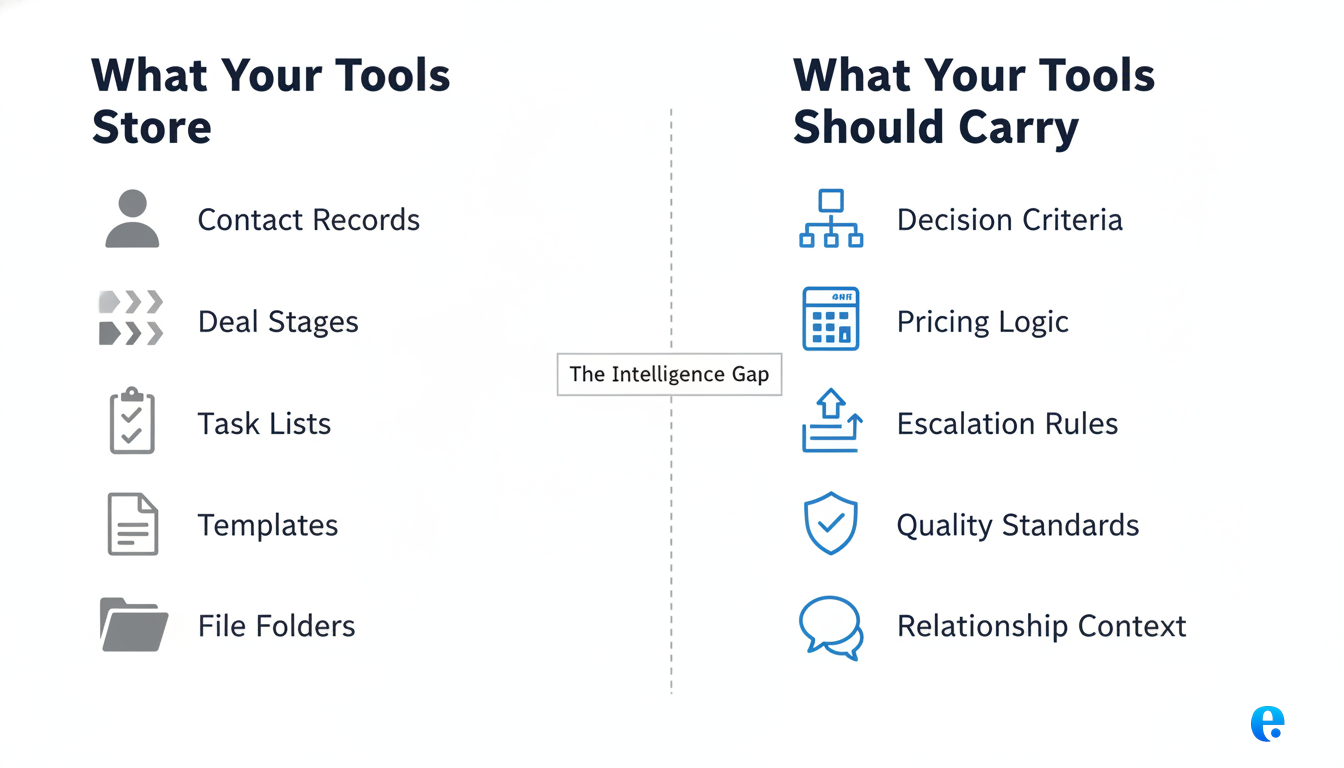
The gap between what your tools store and the intelligence they should carry is where Decision Cost lives. Every time your team opens the CRM and still needs to ask you what to do, the business is paying for that gap.
You paid for the CRM. You customized the fields. You trained the team on how to use it. And every week, you still get the same question from someone on your team: What should we do with this lead?
The CRM knows the name, the company, the last touchpoint, the deal stage. It does not know why you would prioritize this deal over that one. It does not know your instinct for which prospects convert and which ones waste three months of back and forth. It does not know the pricing logic you adjust in real time based on scope, timing, and relationship history.
That intelligence lives in you. And your CRM cannot access it.
This is not a technology problem. This is a packaging problem.
The Tool Trap
Most service businesses between $1M and $10M have invested in tools. CRM. Project management. Shared drives. Communication platforms. The average company at this stage runs on six to twelve tools. Most of them are configured to store data.
None of them are configured to carry intelligence.
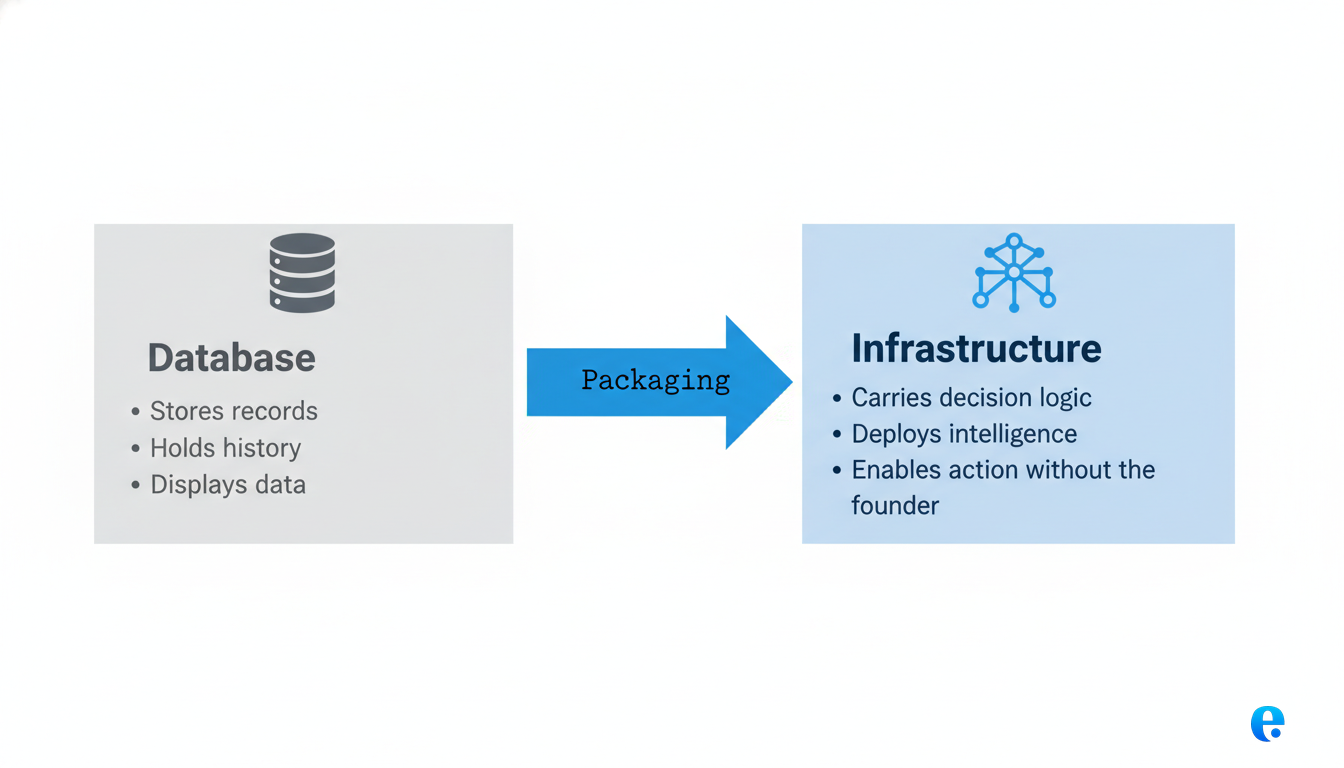
There is a difference between a tool that holds information and a tool that carries the logic behind how that information should be used. A CRM that stores client records is a database. A CRM that carries your decision criteria for how to qualify, price, route, and serve those clients is infrastructure.
Most businesses have the database. Almost none have the infrastructure.
The gap between the two is where Decision Cost lives. Every time a team member opens the CRM and still needs to ask you what to do, the business is paying for that gap in time, margin, and momentum.
Why Tools Alone Do Not Solve the Problem
The instinct when something breaks is to buy another tool. Pipeline is messy. Get a better CRM. Onboarding is slow. Get a knowledge base. Communication is scattered. Get another channel.
But tools are containers. They hold whatever you put in them. If what you put in is data without context, you get a team that has access to records but no access to the thinking behind them.
Consider what happens when a new salesperson joins your team. You give them CRM access on day one. They can see every deal, every contact, every note. But they cannot see:
Why you quoted that client $12,000 instead of $8,000.
Why you passed on that inbound lead even though the company looked perfect on paper.
Why you structured that proposal as a retainer instead of project based.
Why you gave that client priority scheduling while another client with a bigger contract waits.
That is the intelligence layer. It sits above the data. It explains not just what happened, but why. And it almost never lives inside the tool.
The Seven Layers Your Tools Cannot See
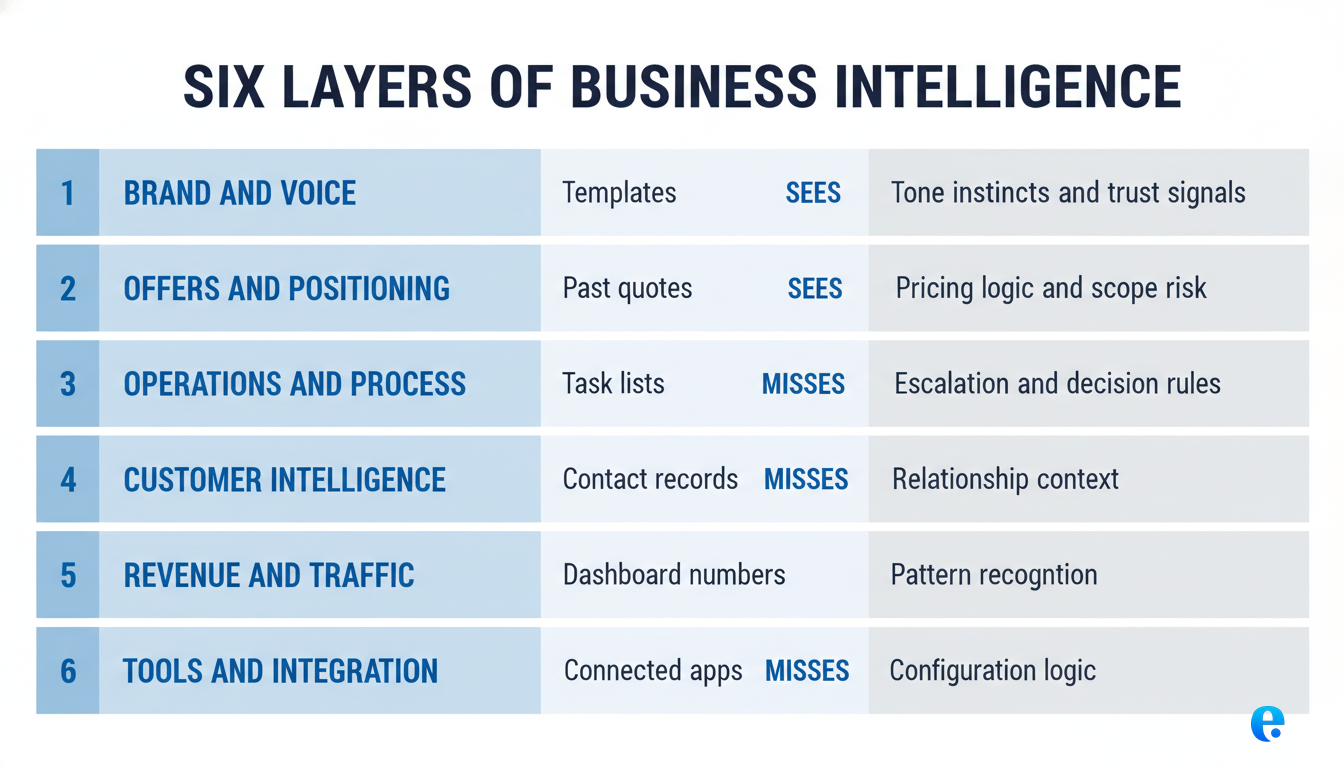
Every founder led service business runs on seven layers of intelligence. Your tools touch the surface of each one, but they rarely carry the depth.
Layer 1: Brand and Voice. Your CRM stores templates. It does not carry your instinct for tone, when to be direct, when to be warm, and what language signals trust to your specific market.
Layer 2: Offers and Positioning. Your proposal tool holds past quotes. It does not carry the pricing logic you adjust based on scope risk, client fit, and competitive pressure.
Layer 3: Operations and Process. Your project management tool tracks tasks. It does not carry the decision rules for when to escalate, when to absorb scope changes, and when to push back.
Layer 4: Customer Intelligence. Your CRM stores contact records. It does not carry the relationship context that tells your team which clients need proactive attention and which ones prefer space.
Layer 5: Revenue and Traffic. Your dashboard shows numbers. It does not carry the pattern recognition that tells you which pipeline signals are real and which ones will stall.
Layer 6: Tools and Integration. Your tech stack is connected. But the logic for why certain tools were configured the way they are, and what breaks if someone changes them, lives in one person's head.
Each layer has data your tools can see. And each layer has intelligence your tools cannot access. The data is in the system. The intelligence is in you.
What Packaged Intelligence Looks Like
The difference between a tool that stores data and a tool that carries intelligence is packaging.
When intelligence is packaged, a team member opens the CRM and sees not just the client record, but the decision framework for how to act on it. When to offer a discount. When to hold price. When to escalate. When to walk away.
When intelligence is packaged, a new hire does not need to shadow you for three months. The logic is structured, accessible, and built into the systems they already use.
When intelligence is packaged, your tools stop being databases and start being infrastructure. The CRM does not just know names. It knows how you think.
This is the shift from storing information to deploying intelligence. And it changes how your entire business operates.
The Real Cost of Unpackaged Tools
Every tool in your stack that runs on data without intelligence creates a dependency. Someone has to interpret the data. Someone has to make the call. And in most businesses, that someone is you.
This is where margin erodes invisibly. Not through bad pricing or lost clients, but through the compound drag of a team that has access to information but not access to the thinking that makes that information useful.
A CRM with 2,000 contacts and no decision criteria for how to prioritize them is not a sales tool. It is a database with a subscription fee.
A project management system with 400 tasks and no escalation rules is not an operations platform. It is a to do list that looks organized.
A shared drive with 50 folders and no structure for how decisions get documented is not a knowledge base. It is a filing cabinet no one opens.
The tools are not the problem. The gap between the tools and the intelligence they should carry is the problem.
One Exercise to See the Gap
Pick one tool your team uses every day. Your CRM, your project management platform, your communication tool. Then ask three questions:
- Can a new team member use this tool to make a decision without asking me?
- Does this tool carry the logic for how to act, or just the data about what happened?
- If I disappeared for a month, would this tool help my team operate, or would it just remind them of what they do not know?
If the answers make you uncomfortable, you are seeing the intelligence gap. The tool works. The intelligence inside it does not.
From Database to Infrastructure
The path from tools that store data to tools that carry intelligence is not a technology upgrade. It is a packaging exercise.
It starts with extracting the intelligence that currently lives in your head. The decision criteria, the pricing logic, the quality standards, the client instincts, the escalation rules. All of it.
Then it gets structured into formats your tools can actually carry. Not a 40 page document no one reads. Structured, queryable, deployable intelligence that lives where your team already works.
Your CRM should not just know who your clients are. It should know how you think about them. Your project management tool should not just track tasks. It should carry the rules for how decisions move. Your communication platform should not just relay messages. It should carry the standards for what good looks like.
That is what it means to package founder intelligence into business infrastructure. The tools stay the same. What they carry changes everything.
Sources and References
Join Us Live
We run a live workshop built for this exact moment. Come see where your tools are carrying data and where they should be carrying intelligence. Not theory. Structure you can install.
See this in your own business.
We run a live workshop where we walk through exactly where your business intelligence is accessible and where it is still trapped. You will leave with a clear picture of what needs to be packaged first.
Join the Live Workshop